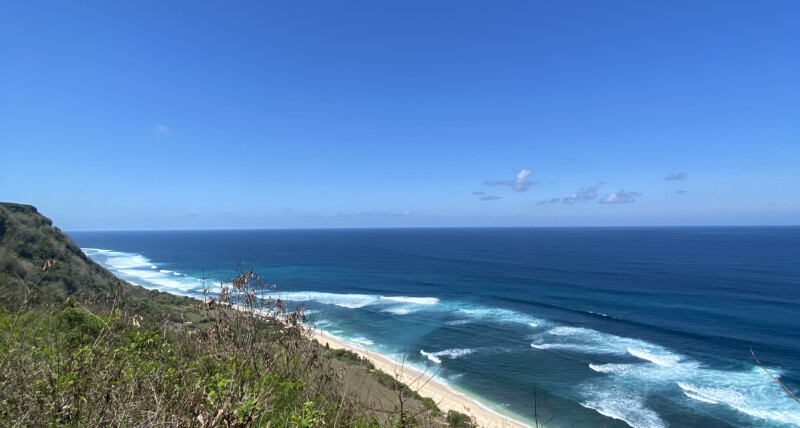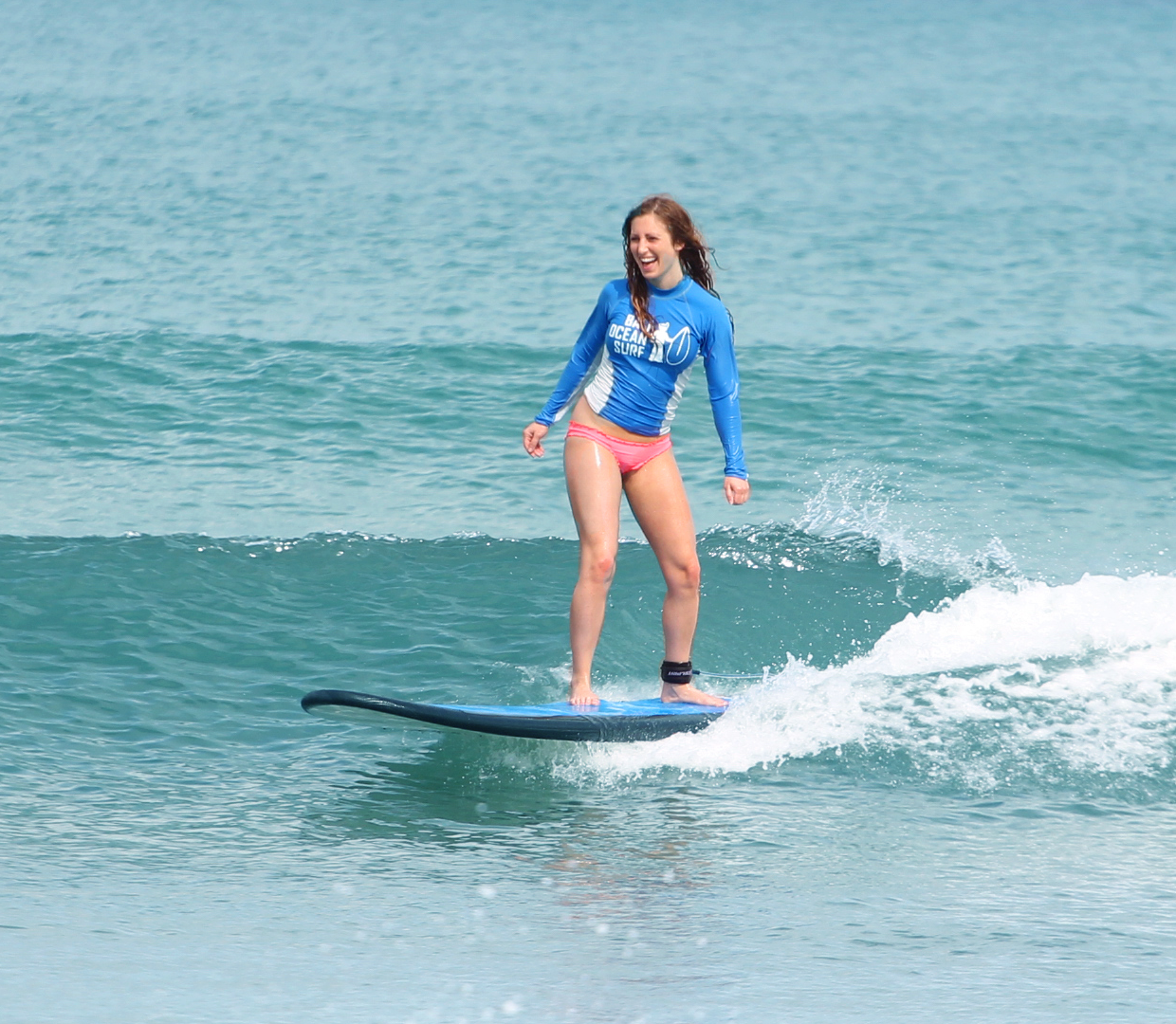
Standing up on the foam is every beginner's first victory. But the real breakthrough in surfing comes the day you leave the whitewater to ride a real wave. Going from whitewater to green waves changes everything: the sensations, the speed, the pleasure. Here's how to make that leap with confidence.
The difference between foam and green waves
Foam is the white, frothy part of an already broken wave. This is where everyone starts: the foam pushes the board, you just need to stand up and maintain your balance. Reassuring, stable, perfect for mastering the basics.
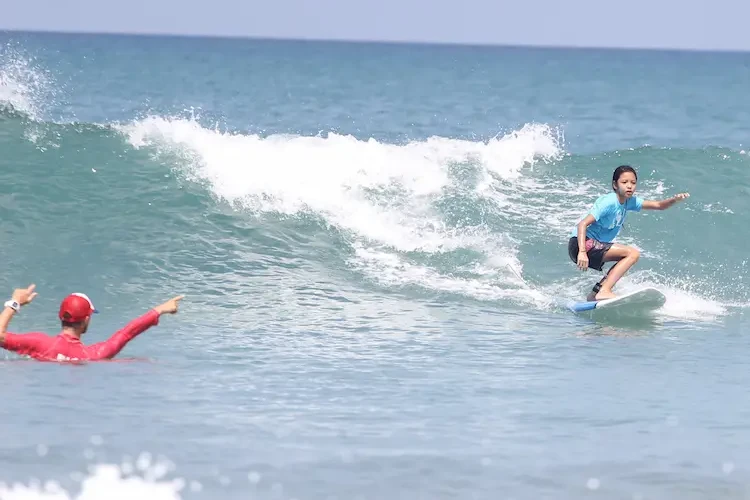
The green wave is actually the wave itself, in its still smooth part, before it breaks and becomes foam. Here, it's no longer the foam that propels; it's the surfer paddling to catch the wave's momentum, then riding along its shoulder. More technical, but infinitely more rewarding.
How do you know if you're ready?
Before aiming for the green wave, certain basics must be acquired. You are ready if:
- You step onto the moss regularly, almost without thinking.
- Your takeoff (transitioning from lying down to standing) is quick and stable.
- You know how to row effectively
- If you know how to steer and have already made small waves in a rip current
- You understand the basics of safety: electrical currents, priorities, and the environment.
If one of these points is missing, don't panic: a few more sessions on the foam and the hurdle will be cleared naturally and gradually.
Steps to Successfully Complete Your First Green Wave
Position Yourself Well
Riding a green wave successfully starts with good positioning. You need to be at the peak, where the wave is starting to break: not too inside (where it's already foam), not too far out (where the wave doesn't have a shoulder yet), and not too far on the side of the wave's shoulder. Watch a few sets before paddling out to identify where the waves are breaking, and also where other surfers are catching waves.
Row earlier and harder
On a green wave, it's all about timing: you have to anticipate your paddle to catch the wave in its momentum, before it overtakes you. When you feel the wave lift and propel you, that's the moment.
Take off frankly and look far
When you take off, your gaze guides your path! Stand up with a dynamic, fluid motion, without hesitation. Above all, keep your eyes on the direction of the wave (to the right or left)—never on your feet or the board.
Adjust your takeoff and flight path
That’s the big difference from foam: on a green wave, the goal isn’t to head straight for the beach. Some waves are deeper and faster and require you to angle your path right from the takeoff. The goal is to head right or left (depending on which way the wave is breaking) and ride along the wave to stay on the smooth part and keep gliding.
Common Mistakes to Avoid
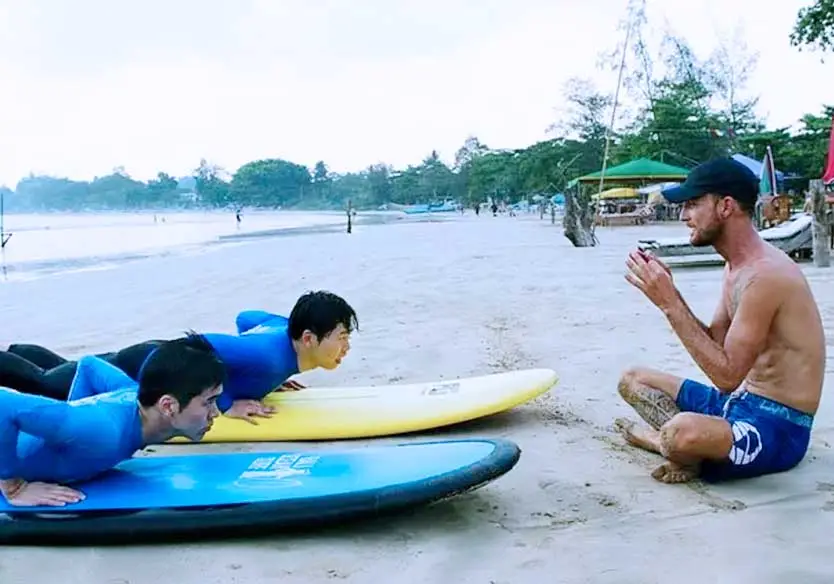
- Jumping in too soon, before you have a truly solid foundation in foam.
- Standing too far inside: the wave has already broken. You risk ending up in the impact zone.
- To start rowing too late: the wave will pass under the board without carrying you with it.
- Putting too much weight on the front: the nose dives (this is called «planting the nose»).
- Watching your board instead of the wave.
- Hesitate when getting up: on a green wave, doubt can make you lose your balance.
Why Bali Is the Perfect Place to Take This Step
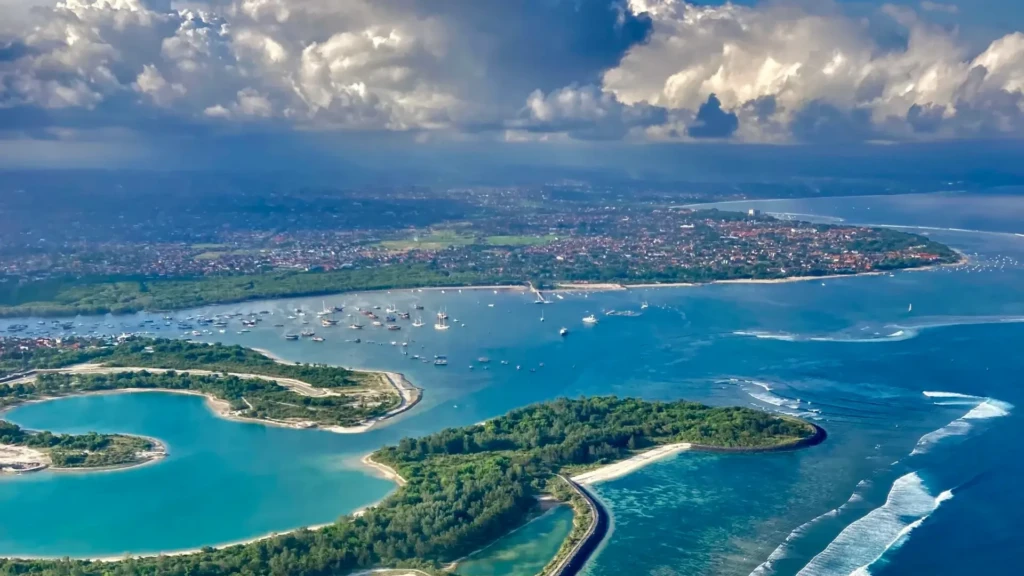
Making the transition from foam to green waves requires consistent, long waves that aren’t too powerful. That’s exactly what Bali offers. Spots with sandy bottoms, such as Kuta or Legian, produce gentle waves that are perfect for practicing and improving with confidence. Since the swell in the Indian Ocean is consistent, all you need to do is check the Swell forecast to find a spot suitable for your level almost every day.
And to take this step safely, having an instructor by your side will make all the difference. At Bali Ocean Surf, the French-speaking instructors are BPJEPS-certified and ISA Level 2 They'll correct your positioning in real time and guide you all the way to your first real green wave!
Bali Ocean Surf’s support to help you reach this milestone:
- Certified French-speaking instructors
- A ratio of 1 instructor to a maximum of 3 students for personalized instruction
- Choosing the best spot of the day based on conditions
- Materials tailored to your level
- Video Analysis to fine-tune the details. You'll make faster progress with more confidence!
Ready to ride your first green wave?
Making the transition from foam to green waves is the milestone that opens up a whole new world of possibilities. With consistent conditions, a dream setting, and French-speaking instructors to guide you, Bali Ocean Surf is the perfect place to take that next step. Check out our surf lessons So go for it: your first green wave is waiting for you. At Bali Ocean Surf, we surf 365 days a year and choose the best spot based on your skill level!