First time on a board, first sensations in the warm water of Bali, first tips on the beach... A first surf lesson in Bali is often more accessible than one might imagine. Here's a concrete look at how a session unfolds and what you can expect.
Why is Bali an ideal destination for a first surf session?
When you're just starting out, the learning environment makes all the difference. In Bali, the water temperature, consistent waves, and variety of spots create particularly reassuring conditions for a first experience.
The real advantage isn't just the scenery. It's especially the ability to adapt the session to the student's level, the tide, the wind, and the student's confidence. For a complete beginner, this makes a huge difference in the quality of the first session.
Before entering the water: the briefing really counts
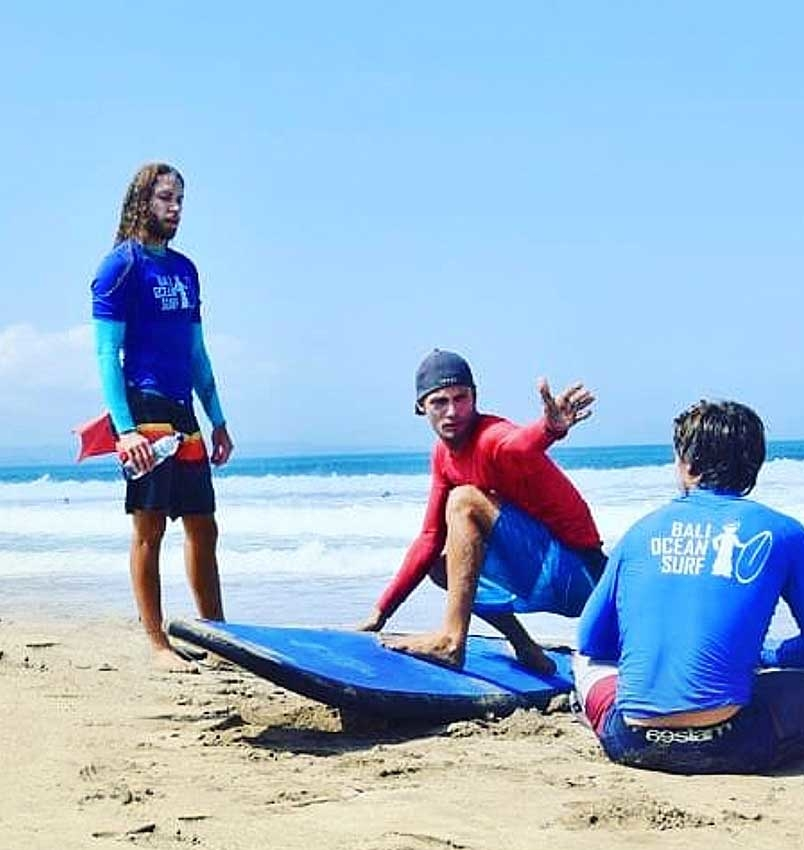
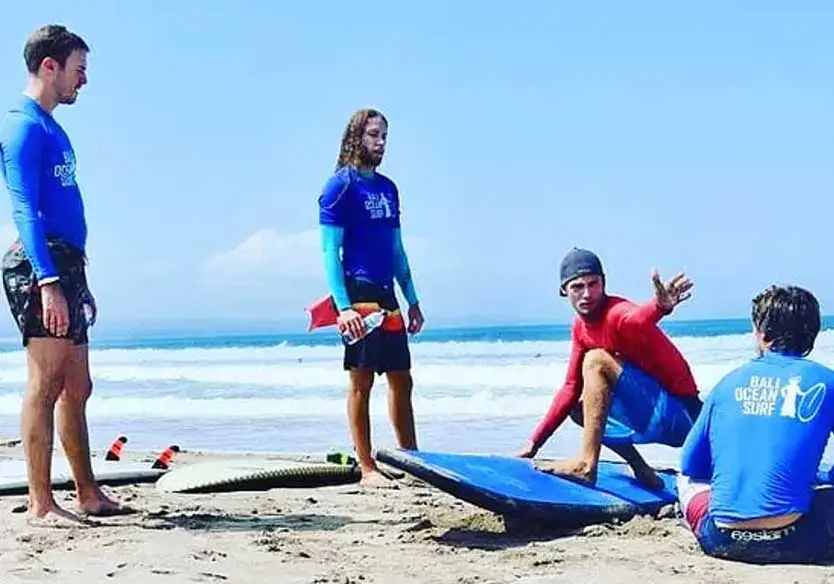
A good first surf lesson always starts on the beach. Even before touching the water, the instructor takes the time to explain the basics: lying on the board, paddling, the takeoff, balance, as well as essential safety rules.
This step helps to alleviate a lot of apprehension. You understand better what you're going to do, you visualize the movements, and you approach the session with much more peace of mind. For a beginner, this time is often very important.
The material used for a initiation
For a first lesson, you don't use a small technical board. The equipment should instead help with learning. Serious schools favor stable, voluminous boards, which are much simpler for a beginner to launch and balance.
The choice of equipment has a direct impact on your first sensations in the water. A suitable board allows you to paddle more easily, catch your first whitewater waves in good conditions, and gain confidence more quickly.
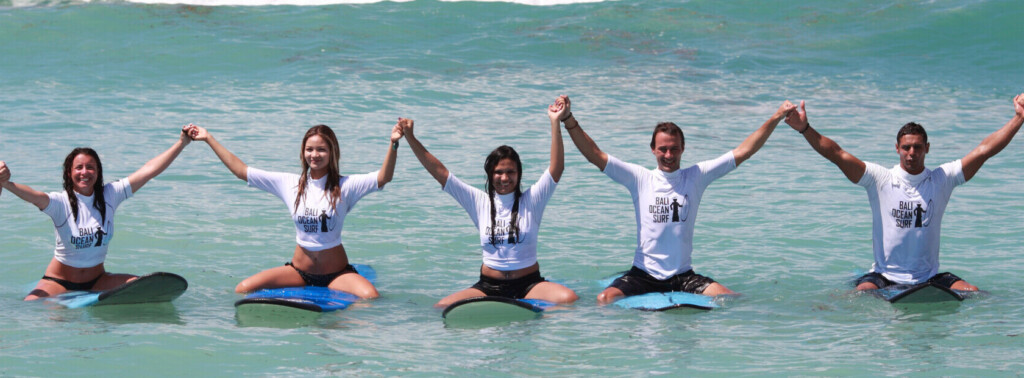
What does the session in the water look like?
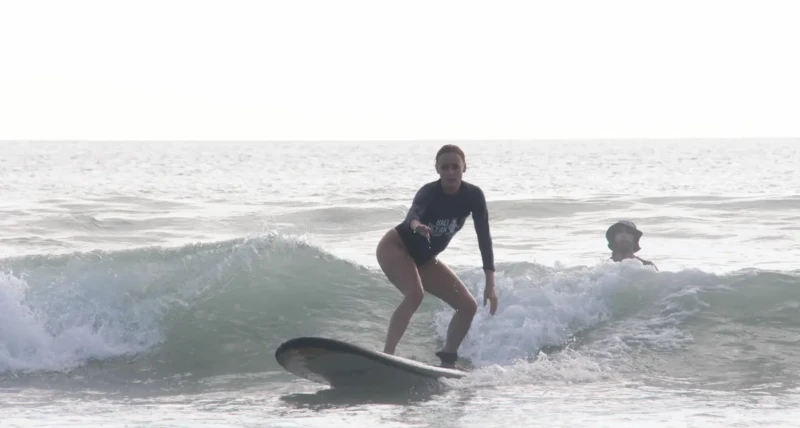
A first session generally takes place in a quiet and accessible area, with small, very easy waves to catch. The goal is not to aim for performance, but to understand the basics and discover the sensation of gliding!
During the lesson, the instructor accompanies the student step by step: positioning on the board, paddling timing, assistance with the start when needed, simple corrections, and regular encouragement. It's this step-by-step guidance that often allows you to catch your first waves faster than you might think.
Should I be afraid of not succeeding?
This is a very common concern, especially when you've never surfed before. In reality, a first lesson isn't meant to be perfect. Its main purpose is to get you familiar with the ocean, understand the basic techniques, and start to build confidence.
Some people get up with the first waves, others need a little more time. In both cases, a good first session remains useful, motivating, and above all fun, because it lays solid foundations for the rest while making you want to come back.
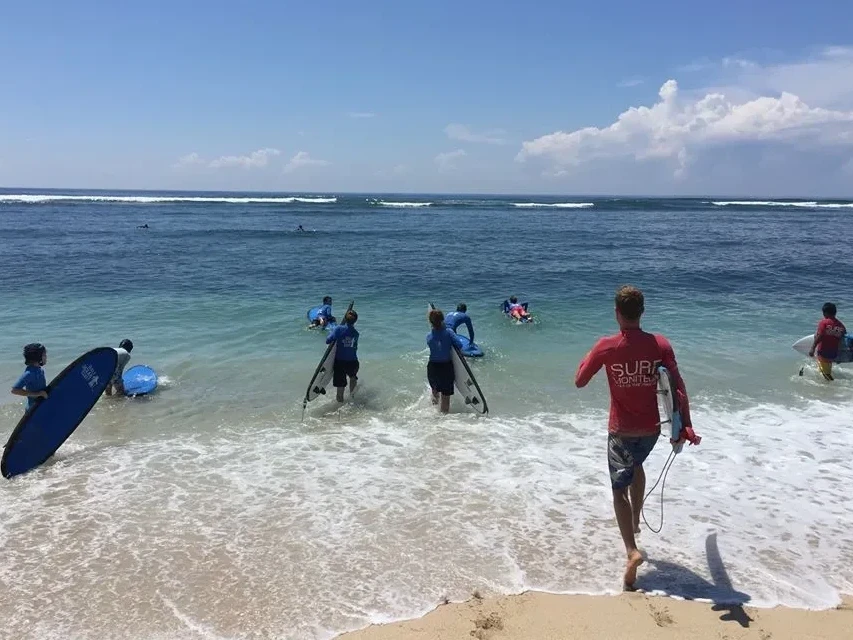
What really makes a difference in a first lesson
The choice of spot, the quality of the briefing, the equipment, the instructor-to-student ratio, and the coach's adaptability are often much more important than simply going surfing. A well-supervised first session allows you to learn faster and have a much more relaxed experience.
That's why it's better to choose a school that pays attention to each student rather than a standardized session. With the right location, quality supervision, and an adapted pace, the first lesson makes complete sense.
Conclusion
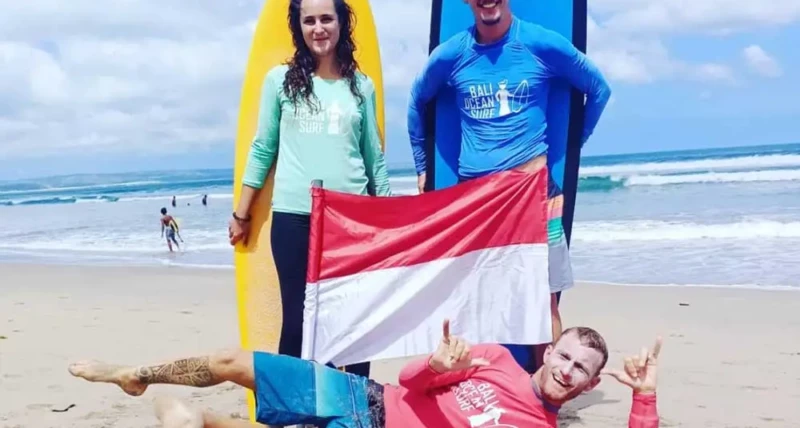
At Bali Ocean Surf, every first lesson is designed to be reassuring, progressive, and motivating. The goal isn't just to get you standing on a board, but to give you your first session in a truly confident atmosphere, with clear explanations, suitable equipment, and attentive supervision. But most importantly, we never forget the essential: fun and the pleasure of gliding on the first waves! If you're preparing for your first session in Bali, our team will be delighted to guide you in the water, seriously, in a great atmosphere!